





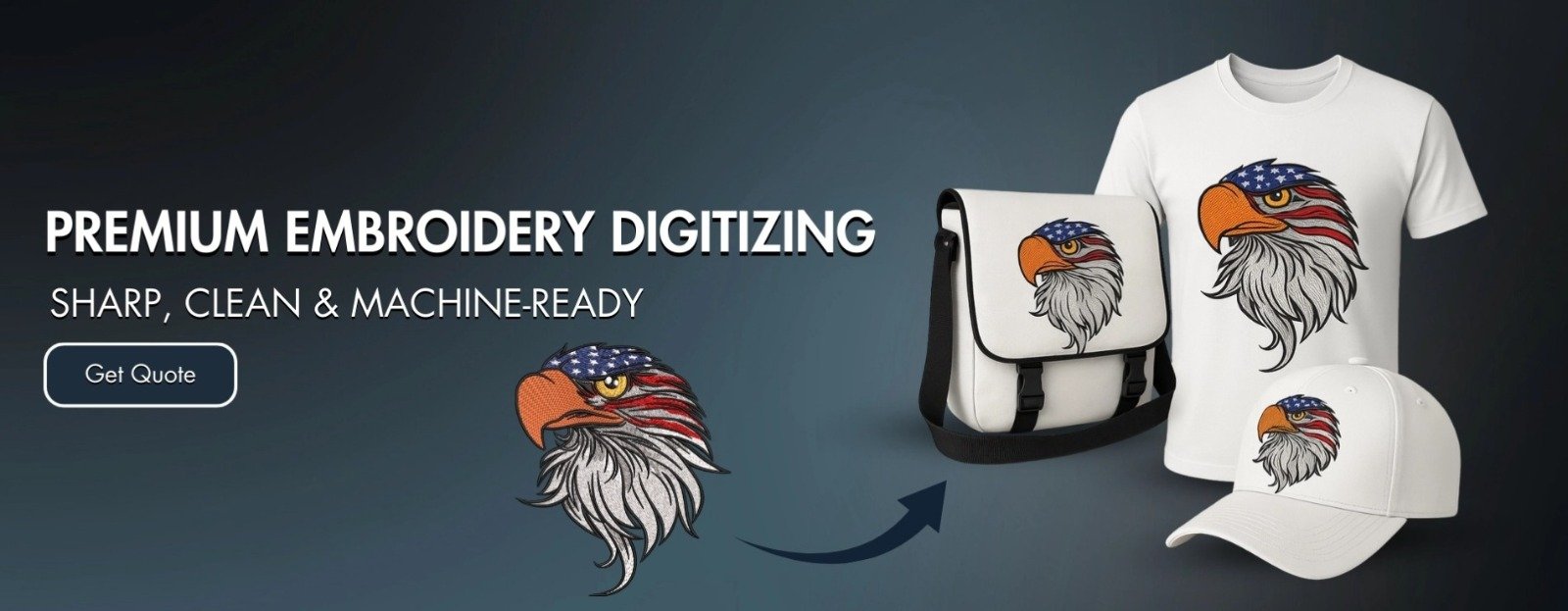
The Invisible Architect: How Embroidery Digitizing Builds Your Perfect Digitized Logo

In the competitive arena of branding and personal expression, the journey from a graphic on a screen to a flawless emblem stitched in thread is governed by a precise and often misunderstood discipline: embroidery digitizing. This critical process serves as the essential bridge, the digital loom that weaves your two-dimensional concept into a tactile, dimensional reality. The crowning achievement of this craft is the creation of a digitized logo—a file that is far more than a converted image. It is a sophisticated set of machine instructions, a blueprint for identity. While the final stitched product captures the eye, it is the quality of the embroidery digitizing process that silently determines the integrity, clarity, and professional impact of your digitized logo. Understanding this symbiotic relationship—where expert embroidery digitizing breathes life into a precise digitized logo—is the key to unlocking apparel that truly represents the quality of your brand or the significance of your personal creation.
To appreciate the value of this craft, one must first dismantle a common misconception. Many believe that placing a JPEG of their logo into an embroidery machine will yield a stitched version. This is fundamentally impossible. A standard image file is a map of colored pixels, a passive picture. An embroidery machine is an active constructor; it requires a sequenced list of commands to operate. This is where embroidery digitizing begins its work. It is the act of translation, of converting visual language into mechanical language. A skilled digitizer analyzes your logo and manually writes the code—a stitch-by-stitch set of instructions saved as a .DST, .PES, or similar format. This final product, your digitized logo, does not contain your picture. It contains the coordinates for every needle drop, the type of each stitch, the order of operations, and the commands for color changes and thread trims. The embroidery digitizing process is, therefore, not a conversion, but a meticulous reconstruction of your design in a new, thread-based dialect.
The art of embroidery digitizing is a unique fusion of creativity and engineering. It begins with artistic interpretation. A professional digitizer examines your logo not just as shapes, but as a composition of textures and weights. They decide which elements will become the glossy sheen of a satin stitch, which broad areas will become the solid plane of a fill stitch, and which fine lines will become the delicate trace of a running stitch. They interpret gradients, simplify complex details for the medium of thread, and ensure the soul of your design remains intact. This artistic judgment is what prevents your digitized logo from becoming a flat, pixelated imitation. It is the first layer of intelligence embedded into the file, ensuring the stitched result has visual depth and hierarchy.
However, artistry alone is insufficient. The true rigor of embroidery digitizing lies in its technical engineering—the invisible architecture that makes the design stable and durable. This is where the digitizer shifts from artist to engineer. They design the underlay: a foundational layer of stitches that stabilizes the fabric, prevents puckering, and creates a perfect base for the top stitches to lie upon. They establish a precise sewing sequence, ensuring the underlying elements are stitched first to anchor the entire design. They apply “pull compensation,” a calculated adjustment that counteracts the natural push and pull of the sewing process, ensuring a perfect circle in your logo doesn’t stitch out as an oval. Every decision about stitch density, direction, and pathing is a technical solution to a physical challenge. This engineering is what transforms a pretty picture into a robust, reliable digitized logo that will run smoothly on a machine and withstand the rigors of wear and washing.
The perils of bypassing professional embroidery digitizing are severe, particularly for a brand’s visual identity. Automated “auto-digitizing” software, which promises an instant digitized logo, lacks both the artistic and technical intelligence described above. It traces pixels without understanding them. The resulting file is a primitive set of commands that often leads to catastrophic results when stitched: fabric that puckers and tunnels, thread that breaks constantly, and a final product where small text is illegible and shapes are distorted. This outcome does more than waste time and materials; it actively damages your brand’s perception. A poorly executed logo on a uniform or promotional item communicates carelessness and undermines credibility. Investing in expert embroidery digitizing is, therefore, not an expense but a direct investment in protecting and enhancing your brand’s equity. It ensures your digitized logo is an asset, not a liability.
The practical benefits of this investment resonate through the entire supply chain. For the brand manager, it delivers consistency and quality. A professionally digitized logo will look identical on the thousandth polo shirt as it did on the first—crisp, clean, and professional. For the embroidery shop, it means operational efficiency. A well-engineered file runs without errors, maximizing machine uptime, minimizing thread breaks, and eliminating the waste of ruined garments. This reliability is the foundation of profitability and reputation in the trade. For the end-wearer, it guarantees longevity. The shirt may fade, but a logo built with proper underlay and stitch density will remain intact, its colors and shape preserved through countless cycles of wear and laundering. The embroidery digitizing process, though unseen, is what imbues your digitized logo with this lasting durability.
Ultimately, the creation of a superior digitized logo is a collaborative partnership between the client and the digitizer. It requires clear communication about the logo’s intent and its destination. A master digitizer will ask crucial questions: Will this be stitched on a structured cap or a stretchy jersey? Is the priority fine detail or maximum durability? This dialogue ensures the embroidery digitizing strategy is tailored to the specific context, yielding a file optimized for its final application. This collaborative spirit transforms the service from a mere transaction into a partnership in quality.
In conclusion, embroidery digitizing is the indispensable, intelligent foundation of modern embroidery. It is the disciplined craft that transforms a graphic into a living, tactile emblem. The digitized logo it produces is not a simple file, but a vessel of encoded expertise—carrying within it both the artistic vision of your brand and the engineering principles required to realize it in thread. To overlook the profundity of this step is to misunderstand the medium entirely. By honoring embroidery digitizing as the critical art and science it is, and by commissioning a digitized logo crafted with such expertise, you ensure that your identity is not just displayed, but is masterfully built into every fiber, commanding respect with every single stitch.